
A driver loft sleeve moves the face angle more than the loft
TaylorMade publishes how far its loft sleeve opens the face. Titleist doesn't. One measured Titleist hosel read the same loft at all 16 settings.
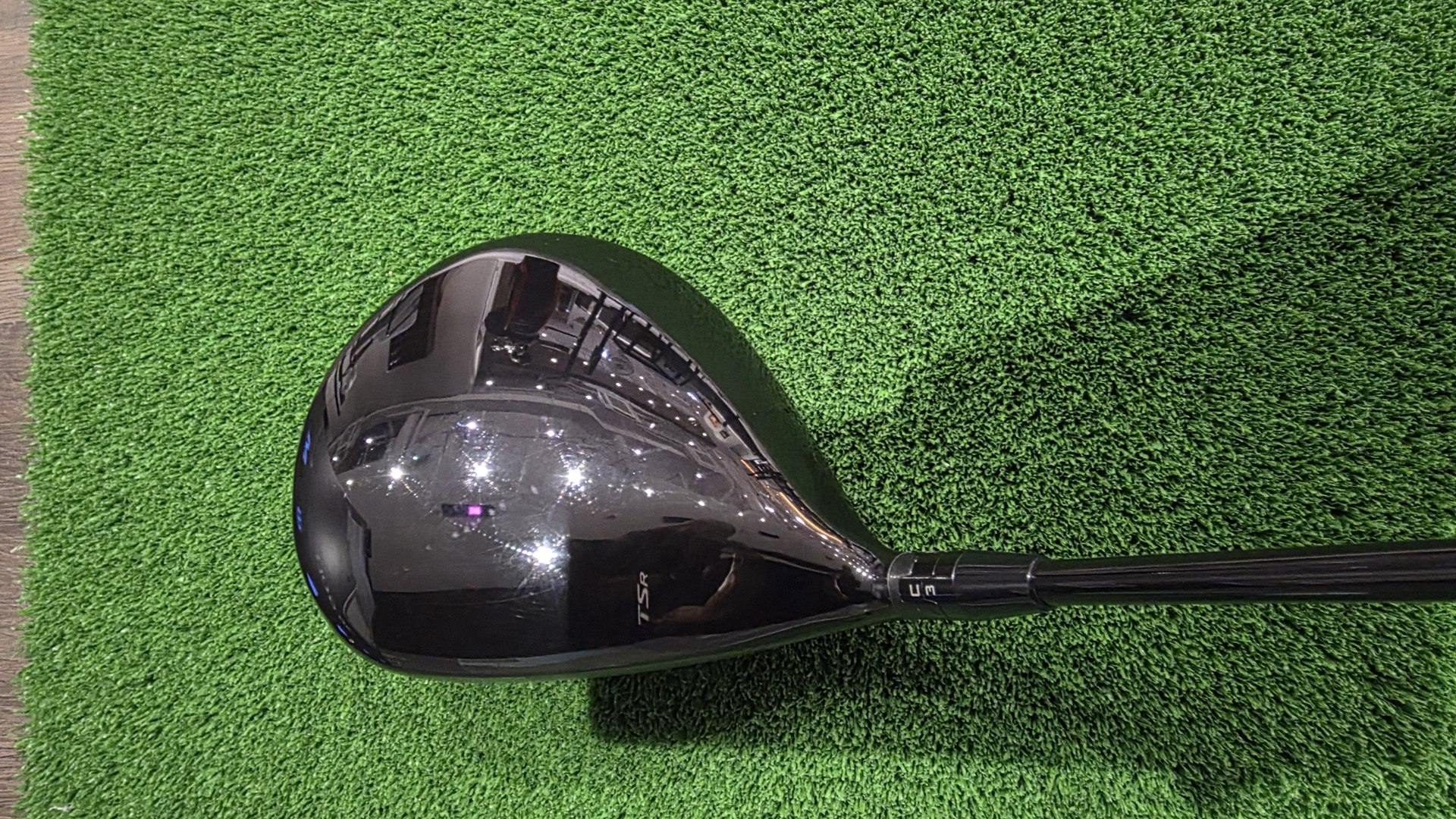
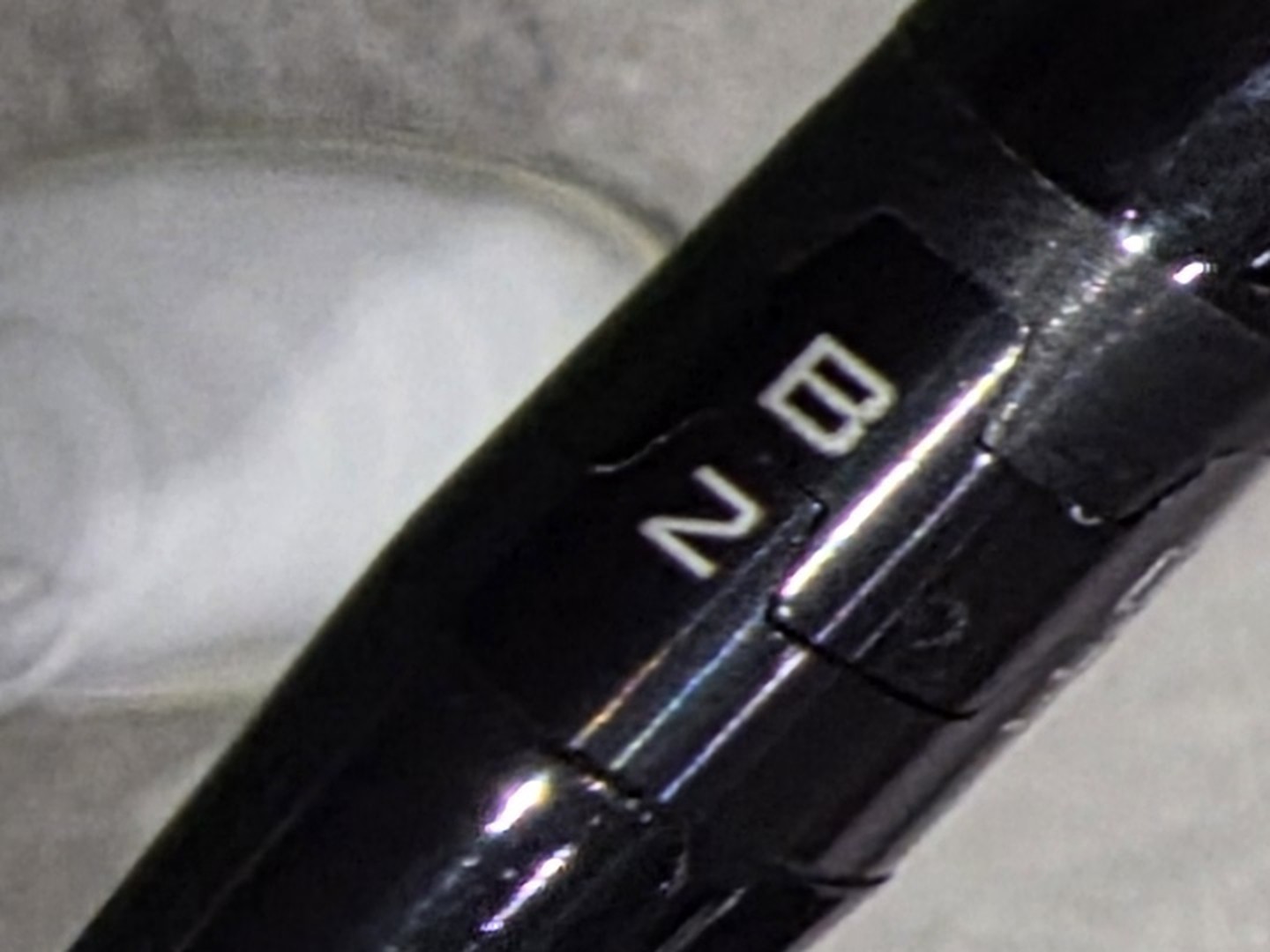
My driver head is stamped 9.0 degrees. The sleeve on its hosel sits at B·2, which isn’t the standard setting. So what loft am I actually playing?
I thought that was a one-minute question. It wasn’t. The four biggest driver brands describe the same part in four different ways, and one of them doesn’t publish the number that moves the most. A clubhead designer measured a batch of these hosels years ago and got results nowhere near the labels.
Here’s what a loft sleeve actually does, what each company tells you, and why “a 10.5 turned down to 9” isn’t a 9-degree driver.
Key Takeaways
- TaylorMade names the part a “Loft Sleeve [Loft, Lie & Face Angle Adjustment]”. One click moves loft 0.5-0.75 degrees and face angle 1.0-2.0 degrees (TaylorMade M5 Tuning Guide, retrieved 2026-08-30).
- Titleist publishes 16 loft and lie combinations for its SureFit hosel and no face angle number at all. A footnote adds that its loft figures assume a square face (Titleist, retrieved 2026-08-30).
- Cobra claims the opposite outcome. Its MyFly manual says SmartPad “square[s]” the face at address regardless of loft setting (COBRA MyFly with SmartPad manual, Wayback snapshot, retrieved 2026-08-30).
- Tom Wishon measured a Titleist 913D2 in all 16 hosel settings on an industry specs machine. Loft read 14.50 degrees at every single one, while measured face angle ranged from 2.5 to 8.0 degrees open (Tom Wishon’s adjustable hosel report, PDF at goodergolf.com, 2013).
- Face angle isn’t a cosmetic detail. TrackMan data puts it at roughly 85% of a driver’s start direction (Titleist Learning Lab, retrieved 2026-08-30).
In this article:
- What the sleeve actually moves
- Four brands, four different disclosures
- Someone measured these hosels. The loft didn’t move.
- Both sides are right. They’re measuring from different positions.
- So is a 10.5 turned down to 9 the same as a true 9?
- What I check now on a used adjustable driver
- Frequently Asked Questions
- What I’d take away
What the sleeve actually moves
TaylorMade is the easiest brand to start with, because it says the quiet part in the product name. In the M5 and M6 tuning guide the section heading reads “LOFT SLEEVE [LOFT, LIE & FACE ANGLE ADJUSTMENT]”. Three specs, one part.
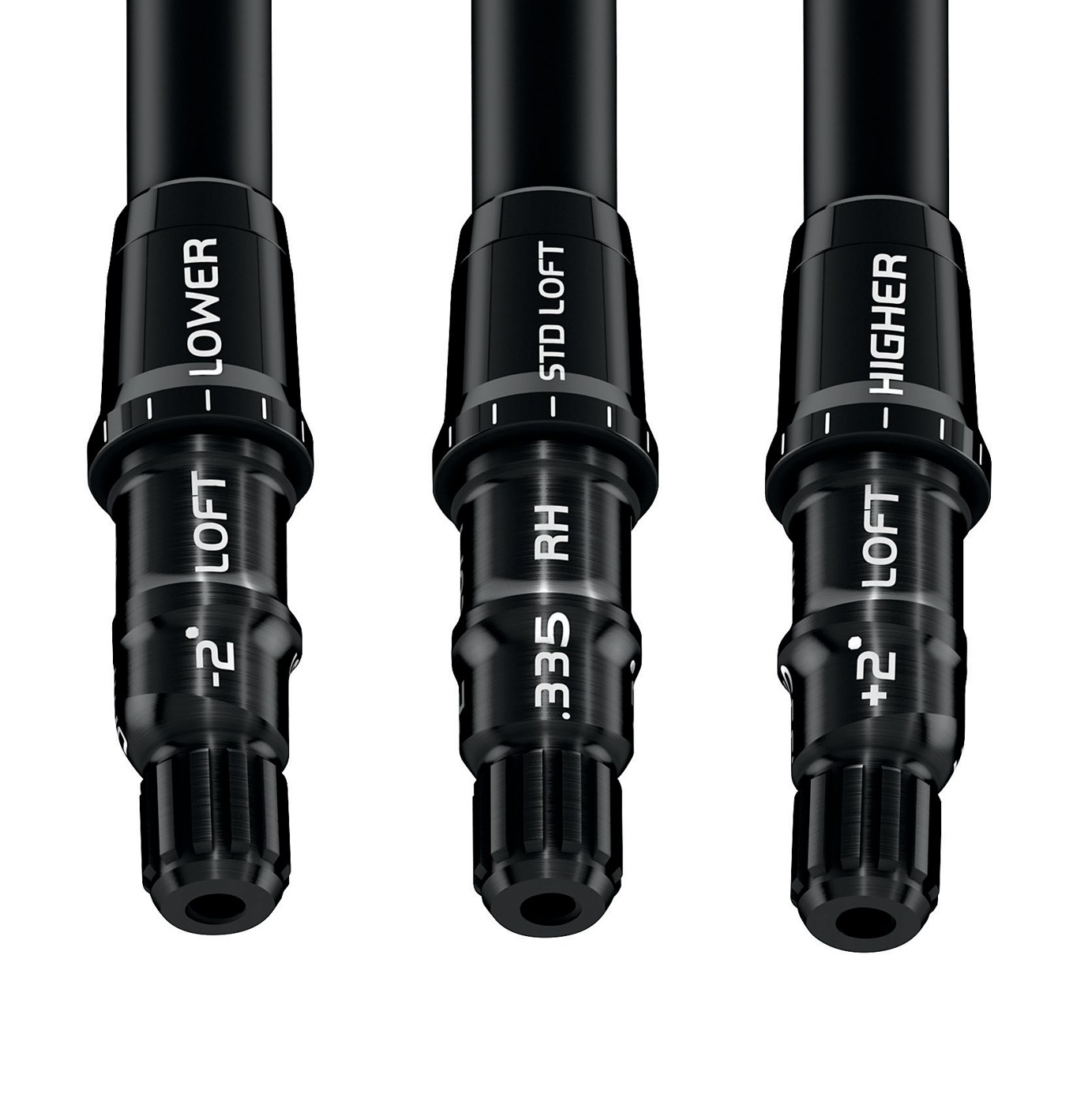 Image: TaylorMade 2020 Tuning Manual. The sleeve is the collar between the shaft
and the head, and the markings on it are loft labels.
Image: TaylorMade 2020 Tuning Manual. The sleeve is the collar between the shaft
and the head, and the markings on it are loft labels.
The guide then gives the rates. Each click of the 4-degree sleeve changes loft by 0.5 to 0.75 degrees and lie by the same amount. Face angle changes by 1.0 to 2.0 degrees per click (TaylorMade M5 Tuning Guide, retrieved 2026-08-30).
The guide also lists the finished positions, and there the face moves about twice as far as the loft.
The same list carries the spin numbers. Add 1.5 degrees of loft and the face sits 3 degrees closed, with spin up about 300 rpm. Take 1.5 degrees off and the face sits 3 degrees open, with spin down about 300 rpm.
That’s the geometry, and it isn’t a TaylorMade quirk. The sleeve works by tilting the shaft axis relative to the head. A tilt that changes how the face points up also changes how it points sideways.
Four brands, four different disclosures
Here’s where it gets strange. Every one of these hosels is built on the same principle, but the companies don’t publish the same things about it.
| Brand | Loft | Lie | Face angle |
|---|---|---|---|
| TaylorMade | Published, plus per-click rate | Published, plus per-click rate | Published, 1.0-2.0 degrees per click |
| Titleist | Published, 0.75-degree steps | Published, 0.75-degree steps | Not listed |
| Ping | Published, plus or minus 1.5 degrees | In a spec footnote, as an average | Not listed |
| Cobra | Published, 33 loft and lie settings | Published | Claimed to stay square |
Titleist’s SureFit page describes “16 unique loft and lie angle combinations”. The sleeve settings are numbered 1 to 4 and the ring settings are lettered A to D. The hosel adjusts in 0.75-degree steps for drivers and fairways.
The grid names each cell ring first, which is why my own driver reads B·2. Face angle is never mentioned.
The grid does carry one footnote worth reading twice: “LOFT = EFFECTIVE LOFT with a square face at impact” (Titleist, retrieved 2026-08-30). That footnote is doing a lot of work. It concedes that the loft number holds only when the face is square, which is another way of saying loft and face angle are entangled.
Ping is quieter still. Its Trajectory Tuning hosel gives plus or minus 1.5 degrees of loft. The lie angle in the published specs carries a note: “Lie angle is an average of the five adjustable loft positions indicated on the hosel” (PING, retrieved 2026-08-30). One printed lie number, averaged across settings that don’t share it.
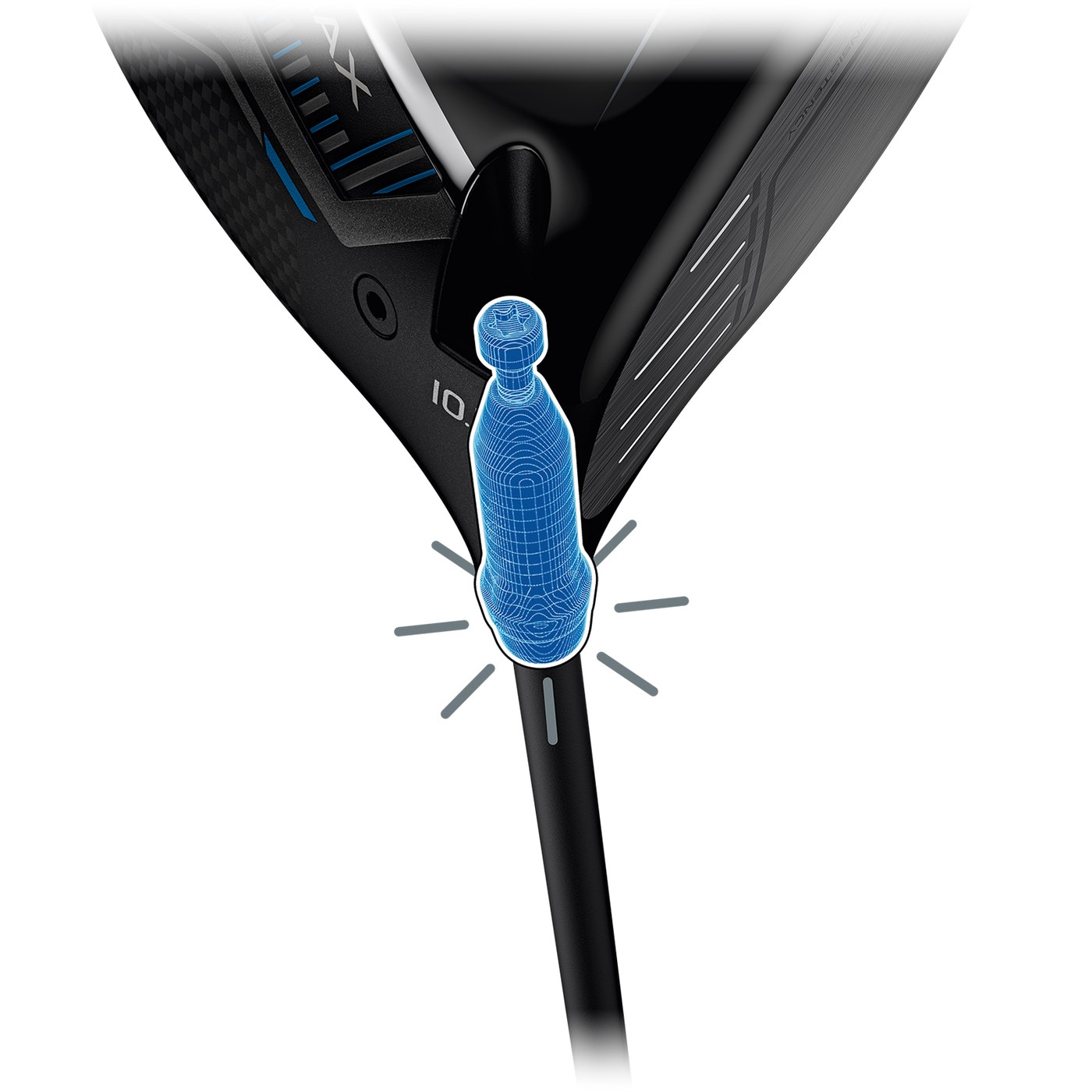 Photo: PING official product page. The sleeve sits where the shaft meets the
head, which is the joint every brand in this article adjusts.
Photo: PING official product page. The sleeve sits where the shaft meets the
head, which is the joint every brand in this article adjusts.
Cobra takes the opposite position outright. Its MyFly manual says the drivers “feature the SmartPad, which has been designed to automatically ‘square’ the face at address regardless of loft setting” (COBRA MyFly with SmartPad manual, Wayback snapshot; Cobra’s own guide page no longer serves the text, retrieved 2026-08-30). The current OPTM drivers pair that sole design with FutureFit33, which Cobra describes as “33 unique loft & lie settings” (COBRA, retrieved 2026-08-30).
On a close read, Cobra isn’t contradicting TaylorMade. SmartPad is a sole shape that changes how the head rests, so the club looks square when you set it down. The claim is about address, not about the face angle the geometry produces. Two companies, two honest sentences, and no way for a buyer to line them up.
Someone measured these hosels. The loft didn’t move.
In 2013 Tom Wishon measured four adjustable drivers on a Tecnorama specs machine, the “Green Machine” that clubhead factories have used since the early 1980s. He recorded loft, lie and face angle at every possible setting on a TaylorMade R1, a Nike Covert, a Ping Anser and a Titleist 913D2. By his own account he designed the first commercial adjustable hosel device, in 1995 (Tom Wishon’s adjustable hosel report, PDF at goodergolf.com, 2013).
The Titleist result is the one that stopped me. Across all 16 SureFit settings, measured loft came out at 14.50 degrees every time, while the chart claimed anywhere from 9.75 to 12.00.
The 2013 Ping Anser read 14.5 degrees at all three of its settings. Both were 10.5-stamped heads measured the same way. Wishon doesn’t say why the two numbers land this close.
On the R1 the hosel positions barely touched loft. The adjustable sole plate did that job.
What did move on the Titleist was face angle. Titleist doesn’t publish that number, so I grouped Wishon’s 16 measurements by the loft row Titleist assigns each setting and averaged them.
The pattern runs the same direction as TaylorMade’s published table. Ask the Titleist hosel for less loft and the face measures more open. Ask it for more loft and the face measures less open. Across a 2.25-degree span of claimed loft, measured face angle swung about 4.5 degrees.
The steps aren’t even, though. Most of the swing happens between the “+0.75” and “standard” rows. That’s where the settings jump from the C and D group to the A and B group. I’d rather show that than smooth it out.
Two caveats belong here. This report is from 2013 and the heads are that old, so I can’t claim a 2026 GTS or Qi behaves identically. And it’s one careful measurer, not a repeated study. I looked for a second independent measurement of adjustable hosels at this level of detail and didn’t find one.
Both sides are right. They’re measuring from different positions.
It would be easy to write this up as manufacturers lying. That isn’t what’s happening, and the real explanation is more useful.
Wishon measures static loft with the head soled in its natural resting position, the way the industry has measured woodheads for decades. Titleist states effective loft with a square face at impact. Its own footnote says so. Those are two different reference positions, and the same head gives two different numbers.
Wishon’s objection is practical rather than mathematical. To play the loft on the label, he argues, a golfer would have to rotate the head into that position. He’d then have to hold it there through the start of the swing.
Nobody addresses a driver that way. People sole the club and take the grip.
There’s a detail in his tables that supports the charts rather than attacking them. Titleist’s grid says moving from A·1 to B·2 leaves loft alone and makes the lie 0.75 degrees more upright. Wishon measured the same move as no change in loft and 1.0 degree more upright.
The relative promise held. It’s the absolute number that depends on which convention you use, and nobody tells the buyer which one they’re getting.
So is a 10.5 turned down to 9 the same as a true 9?
No, on either convention.
Take the manufacturer’s own view first. On a TaylorMade sleeve, going down 1.5 degrees of loft leaves the face 3 degrees open and spin about 300 rpm lower.
The lie moves as well. The guide lists two minus-1.5 positions, at 57.25 and 58.75 degrees of lie. Its two square-face positions sit at 56 and 60, one standard and one marked upright (TaylorMade M5 Tuning Guide, retrieved 2026-08-30). Either way the shift is 1.25 degrees, and the direction flips depending on which one you started from.
A head built at 9 degrees sits square at 9 degrees. Same loft on paper, different club in the hands.
Now take the measured view. If static loft barely moves when you turn the sleeve, then a 10.5 “set to 9” is a 10.5 with an open face. That’s further from a true 9 than the label suggests, not closer.
Either way the difference lands on face angle, which is the specification neither Titleist nor Ping prints. It’s also the one that steers the ball.
Three degrees of open face is not a rounding error at that ratio. Run it through the 85% figure and the ball starts about 2.5 degrees right of where it otherwise would. At 230 yards that’s roughly 10 yards offline for a right-hander. The arithmetic there is mine, not a measurement, and it arrived because someone wanted a degree and a half less loft.
What I check now on a used adjustable driver
This started as a question about my own club, so here’s what I do with it.
I ask the seller what setting the hosel is in, not what loft it’s “set to”. Those are different questions and only the first has a checkable answer. A photo of the sleeve markings settles it in seconds.
I treat the stamped head loft as the real spec and the sleeve position as a modifier. A 10.5 head is a 10.5 head. If a listing says 9, I want to know whether that’s a 9-degree casting or a 10.5 rotated two clicks.
The second one carries an open face along with it. That’s the same trap as the shaft flex letters, which aren’t standardized between brands either.
Then I reset it to standard and judge from there. Standard is the only position where the printed loft, the printed lie and a square face are all supposed to agree. If a club only works for me two clicks down, that’s useful information about the head, not a reason to call it a different loft.
The same habit applies further down the bag. Iron lofts have been moving quietly for years, which shows up model by model in Titleist T100 lofts by generation. The printed number is a starting point, not the answer.
As for my own driver at B·2: on Titleist’s chart that’s standard loft with the lie 0.75 degrees upright. So the head is playing its stamped 9.0 degrees, by Titleist’s definition of loft, with a slightly upright lie. By Wishon’s definition it’s something else entirely, and I don’t have a Green Machine to settle it.
Frequently Asked Questions
Does changing driver loft change the face angle on every brand?
On the hosels that work by tilting the shaft axis, yes, the geometry couples them. That includes TaylorMade’s and Titleist’s. TaylorMade publishes the rate at 1.0 to 2.0 degrees of face angle per click (TaylorMade, retrieved 2026-08-30). Cobra’s SmartPad is a sole design meant to make the head still look square when you set it down, which is a different claim.
Is a lower loft setting the same as buying a lower-lofted head?
No. On the hosels that tilt the shaft axis, the lower setting also opens the face and moves the lie. TaylorMade’s published table drops spin by about 300 rpm at 1.5 degrees down. A head built at that loft starts square.
Why does my adjustable driver look open at address in the low setting?
Because on the heads Wishon measured, it was. He recorded a Titleist 913D2 at 2.5 to 8.0 degrees open depending on setting. He also noted that heads measuring open on the machine looked open when soled on a flat surface (Tom Wishon’s adjustable hosel report, PDF at goodergolf.com, 2013).
How much loft can a sleeve actually add or remove?
TaylorMade’s is a 4-degree sleeve, so 2 degrees either way, and its guide lists positions out to that limit. Ping states plus or minus 1.5 degrees. Whether static loft moves that far is exactly what’s in dispute above.
What I’d take away
The loft sleeve is real and it does something. It just doesn’t do only the thing printed on it. The specification it moves furthest is the one two of the four big brands don’t print.
TaylorMade publishes face angle. Titleist publishes a footnote that implies it. Ping averages the lie and moves on. Cobra says the face stays square at address and means something narrower than it sounds.
None of that is a lie, and none of it lets a buyer compare two used drivers.
The one habit I kept is asking for the hosel setting, not the loft. The setting is a fact. The loft is a convention.